
Description
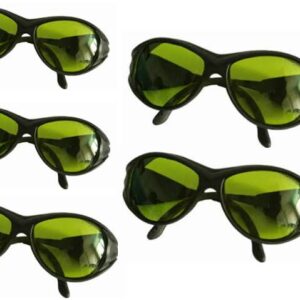
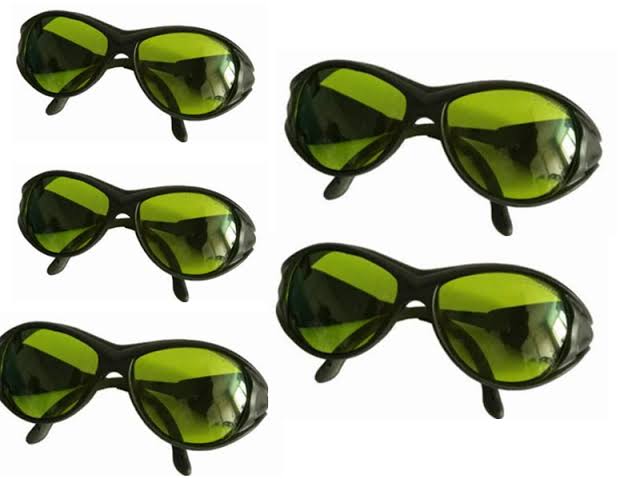
Laser Safety Goggles OD5+ 200nm
Laser Safety Goggles OD5+ 200nm are wavelength-specific laser protective eyewear designed to shield the eyes from direct, reflected, or scattered laser radiation in the deep ultraviolet (UV) region, specifically around 200 nanometers (nm). They combine high optical density filtration with durable frame construction to reduce transmitted laser energy to safe levels.
The designation “OD5+” means the lenses provide an Optical Density of at least 5 at the specified wavelength, offering a very high level of attenuation. The “200nm” specification indicates the goggles are rated and optimized for protection in that deep UV range, rather than broad, generic UV coverage.
Unlike standard safety glasses or general UV-blocking eyewear, laser safety goggles must be matched to the exact laser wavelength in use. Deep UV at 200nm requires specialized filter materials and coatings to effectively absorb or block this high-energy radiation without compromising optical clarity or structural durability.
Understanding Optical Density (OD) and OD5+
Optical Density (OD) is the measurement used to determine how much laser radiation a protective filter blocks. It represents the logarithmic reduction of light transmission at a specific wavelength.
The formula for attenuation is:
Transmission (%) = 10^(-OD) × 100
Based on this calculation:
- OD5 reduces laser transmission to approximately 0.001% of the incident beam (a factor of 10^5 reduction).
- OD5+ means an Optical Density of 5 or greater at the rated wavelength, providing at least 10^5 times of attenuation, with even higher protection depending on the lens specification.
This level of protection is critical for UV lasers, where exposure can cause photochemical damage to the cornea and lens of the eye with little or no immediate visible sensation. OD5+ offers a substantial safety margin for controlled laser work environments where UV radiation is present.
Why 200nm Wavelength Protection Matters
The 200nm wavelength falls within the deep ultraviolet region, often referred to as UV-C (roughly 200–280nm) and extending into the vacuum UV (VUV) range around 200nm and below. This range is particularly hazardous for several reasons:
- High Photon Energy – Shorter UV wavelengths carry significantly more energy per photon than visible or near-UV light. This energy is capable of breaking molecular bonds and causing photochemical damage to biological tissues.
- Corneal and Lens Sensitivity – UV radiation below ~300nm is strongly absorbed by the outer eye, primarily the cornea and aqueous humor. Deep UV at 200nm is absorbed very near the surface, increasing the risk of photokeratitis (corneal inflammation), epithelial damage, and long-term cumulative injury.
- No Natural Warning Response – Deep UV radiation is invisible to the human eye and does not produce an immediate glare or aversion reflex. This makes accidental exposure especially dangerous, as damage can occur before a user realizes it.
- Common in Specialized Lasers – Wavelengths around 200nm are generated by certain excimer lasers, frequency-converted UV lasers, and vacuum UV laser systems used in research, spectroscopy, photolithography, and materials processing.
- Surface Reflection Risks – UV beams can reflect off polished metals, optics, and other surfaces. These specular reflections can remain hazardous even if the primary beam is contained, making full eye coverage essential.
For these reasons, Laser Safety Goggles OD5+ 200nm must be wavelength-specific. General UV400 or broad-band UV sunglasses do not provide verified laser attenuation at a discrete laser wavelength and are not considered adequate for laser safety applications.
How Laser Safety Goggles OD5+ 200nm Work
Laser safety goggles protect the eyes by absorbing or blocking specific wavelengths of laser radiation while allowing safe levels of ambient light for visibility. For deep UV at 200nm, this requires advanced optical filter technology.
- Selective Wavelength Absorption – The lenses are formulated with specialized UV-absorbing dyes, compounds, or multilayer filter materials designed to target 200nm radiation with high efficiency.
- High Optical Density Filtration – The filter achieves OD5+ attenuation at 200nm, reducing transmitted energy to non-hazardous levels while maintaining spectral precision for that protection range.
- Deep UV Stability – Materials used for 200nm filtration must resist degradation from prolonged UV exposure. Deep UV can break down inferior filter materials over time, so stability is critical for long-term safety.
- Optical Clarity – Quality laser safety lenses are engineered to block only the hazardous wavelengths while maximizing visible light transmission (VLT) where possible, helping reduce eye strain and maintain situational awareness.
- Full Perimeter Protection – Wraparound or properly sealed goggle designs help block scattered radiation, off-axis beams, and reflections from reaching the eyes from the sides.
This targeted filtration is what differentiates certified laser safety goggles from standard UV-blocking eyewear.
Key Features of Laser Safety Goggles OD5+ 200nm
Well-designed Laser Safety Goggles OD5+ 200nm combine protection, comfort, and durability for laboratory and industrial use. Key features include:
- Wavelength-Specific Protection – Rated for OD5+ at 200nm, with clearly marked protection wavelengths on the goggles or lens labeling for verification before use.
- High Attenuation Level – OD5+ provides robust protection against high-energy UV laser pulses or continuous wave (CW) sources within their specified damage threshold range.
- Specialized Deep UV Filter Materials – Constructed to withstand deep UV exposure without rapid solarization or filter bleaching, helping maintain consistent attenuation over time.
- Durable Lens Construction – Scratch-resistant and chemically resistant surfaces help preserve optical integrity in controlled lab or cleanroom environments.
- Secure, Comfortable Fit – Adjustable headbands, soft goggle frames, or ergonomic contours help ensure a proper seal and reduce fatigue during extended periods of use.
- Broad-Side Protection – Wraparound goggle-style designs help minimize exposure from indirect reflections, which are a common concern with UV beams.
- Optical Quality Control – Precision-filtered lenses maintain minimal distortion to support accurate alignment of optical setups while ensuring full protection.
- Clear Identification Markings – Certified laser eyewear typically includes wavelength range, OD values, and applicable standard markings to allow for quick, safe verification before operation.
These features ensure both safety compliance and practical usability in UV laser work areas.
Laser Safety Standards and Compliance
Laser eye protection must meet recognized international safety standards to ensure verified attenuation and reliability. When evaluating Laser Safety Goggles OD5+ 200nm, the following standards are most relevant:
- ANSI Z136.1 (American National Standard for Safe Use of Lasers) – The primary U.S. guideline for laser safety. It requires wavelength-specific, OD-appropriate eyewear based on the Maximum Permissible Exposure (MPE) and laser classification.
- EN 207 (European Standard) – Specifies requirements for laser safety eyewear, including optical density, damage threshold (L-rating), and wavelength coverage. This standard verifies that filters can withstand the laser energy they are intended to block.
- EN 208 – Covers alignment eyewear for lower-power visible lasers but is less applicable for high-attenuation deep UV protective goggles.
- IEC 60825 Series – International standards for laser product safety and user protection, outlining requirements for safe laser operation and appropriate personal protective equipment (PPE).
- CE Marking (Where Applicable) – Indicates conformity with applicable European safety directives for personal protective equipment used in laser environments.
Compliance with these standards ensures the OD5+ rating at 200nm is tested, verified, and reliable—not estimated. For any laser safety application, certified eyewear matched to the specific wavelength and exposure parameters is essential.
Industrial and Scientific Applications of Laser Safety Goggles OD5+ 200nm
Due to its deep UV wavelength and high energy, 200nm laser radiation is primarily found in specialized environments. Laser Safety Goggles OD5+ 200nm are used in applications where this exposure is present:
- Scientific Research and Spectroscopy – Deep UV lasers are used in fluorescence spectroscopy, UV resonance Raman, vacuum UV studies, and other analytical techniques that require protection from stray or direct beams.
- Semiconductor and Photolithography – Advanced lithography research, thin-film processing, and materials characterization may involve deep UV or frequency-converted UV sources that require high-attenuation eye protection.
- Excimer Laser Applications – Certain excimer laser lines and UV generation setups can reach wavelengths near 200nm. Proper eyewear helps safeguard personnel during alignment, testing, and operation.
- Materials Science and Surface Modification – UV laser ablation, micro-patterning, and surface treatment research often involve short-wavelength beams where scattered UV poses a hazard.
- Optics Testing and Laser Development – Laboratories developing or characterizing UV laser systems require strict PPE protocols, with wavelength-specific goggles for safe beam alignment and diagnostics.
- Academic and University Laboratories – Research labs working with UV lasers must follow laser safety programs that require certified eyewear matched to each laser’s emission wavelength.
- Controlled Cleanroom Environments – In precision optics or semiconductor R&D, Laser Safety Goggles OD5+ 200nm provide necessary protection while maintaining compatibility with cleanroom protocols.
These applications all share one critical requirement: protection must be matched specifically to 200nm to be effective.
Best Practices for Use, Care, and Maintenance
To ensure maximum safety and longevity, Laser Safety Goggles OD5+ 200nm should be used and maintained correctly:
- Verify Wavelength and OD Before Use – Always check the lens markings to confirm OD5+ protection at 200nm matches the laser in use. Never assume broad UV coverage is sufficient for laser radiation.
- Inspect Before Each Use – Check lenses for scratches, pitting, discoloration, coating damage, or warping. Deep UV exposure can degrade damaged filters faster and may compromise protection.
- Ensure Proper Fit and Coverage – Goggles must fit snugly with no gaps around the eyes. Side protection is especially important for UV reflections off optical tables, mirrors, or metallic surfaces.
- Use Only for Their Rated Range – These goggles are wavelength-specific. Using them for different laser wavelengths outside their rated protection range can result in insufficient attenuation.
- Store Properly – Keep in a clean, dry protective case away from direct sunlight, harsh chemicals, and abrasive surfaces to prevent lens damage.
- Clean Correctly – Use only approved, non-abrasive lens cleaning methods recommended for coated laser safety lenses. Avoid harsh solvents that could damage UV filter coatings.
- Replace When Compromised – If lenses are scratched, deeply marked, discolored from UV aging, or if the goggles have sustained impact damage, they should be removed from service. Filter degradation can be difficult to detect visually but reduces protection.
- Follow Institutional Laser Safety Protocols – Always adhere to your facility’s Laser Safety Program, standard operating procedures (SOPs), and guidance from the Laser Safety Officer (LSO) regarding PPE selection.
These practices help maintain the verified level of protection throughout the service life of the eyewear.
Why Wavelength-Specific Protection Is Critical
A common and dangerous misconception is that any “UV-blocking” eyewear provides sufficient protection against UV lasers. This is false for laser safety. Unlike continuous broadband UV sources, lasers emit highly concentrated, monochromatic radiation. Effective laser protection requires filters tested and rated for that specific wavelength and optical density.
Laser Safety Goggles OD5+ 200nm are engineered and rated specifically for 200nm deep UV. Using non-laser-rated UV glasses at this wavelength can allow hazardous transmission levels, putting users at serious risk of irreversible eye injury. For this reason, wavelength-specific certification is the most important factor when selecting laser eye protection.
Frequently Asked Questions (FAQs)
What does OD5+ mean for laser safety goggles?
OD5+ means Optical Density of at least 5 at the specified wavelength. This provides at least a 10^5 reduction in laser transmission, blocking 99.999% or more of the incident laser radiation to help keep exposure below safe limits.
Why are Laser Safety Goggles OD5+ 200nm needed for UV lasers?
Deep UV at 200nm has very high photon energy and is strongly absorbed by the cornea. It is invisible, has no natural blink reflex, and can cause serious photochemical eye damage. Wavelength-specific OD5+ protection is required to safely attenuate this radiation.
Are general UV goggles enough for a 200nm laser?
No. General UV-blocking glasses are not tested for monochromatic laser attenuation. Laser safety requires wavelength-specific, OD-rated, and standards-compliant eyewear. Only certified Laser Safety Goggles OD5+ 200nm can provide verified protection at 200nm.
What safety standards apply to laser safety goggles?
Key standards include ANSI Z136.1, EN 207, and IEC 60825. EN 207 is especially important as it verifies both optical density and laser damage threshold for the specified wavelength.
Where is 200nm laser protection typically used?
It is used in deep UV laser research, spectroscopy, vacuum UV experiments, materials science, excimer laser work, photolithography research, and other specialized laboratory environments where 200nm laser radiation is present.
How long do deep UV laser safety goggles remain effective?
With proper storage, careful cleaning, and no physical or coating damage, high-quality filters remain effective for extended use. However, deep UV can cause gradual filter aging over time. Regular inspection is essential, and any signs of damage, discoloration, or degradation mean the goggles should be taken out of service.
Conclusion
The eyes are the most vulnerable part of the body when working with lasers, and deep UV radiation at 200nm presents one of the highest risks due to its invisibility, intensity, and photochemical potential. Laser Safety Goggles OD5+ 200nm provide the wavelength-specific, high-attenuation protection required to mitigate these hazards safely and effectively.
With OD5+ optical density, specialized deep UV filtration, and compliance with recognized laser safety standards, these goggles deliver reliable protection in research, scientific, and specialized industrial environments. Proper selection, verification, fit, inspection, and care are essential to ensure they perform as intended.
Reviews
There are no reviews yet.